
Gran Cenote, Tulum in 2026: Price, Rules, Turtles and the Trip from Cancún
500 pesos at the gate, a sunscreen ban that is enforced, turtles in the shallows — and a two-hour drive from Cancún that most guides forget to mention.
The quick answer: Gran Cenote, Tulum in 2026
Gran Cenote is a semi-open cavern cenote about 4 km west of Tulum town on the road to Cobá — roughly two hours from Cancún's Hotel Zone and 1 h 45 m from Cancún airport. In 2026 entry is 500 MXN per adult, paid in cash; it opens at 8:00 a.m., takes last entry around 4:15 p.m. and closes at about 4:45 p.m.
Three things catch people out. It is not in Cancún: it is 120 to 138 km south, so it is a day trip, not an afternoon swim. Sunscreen is banned in the water and the shower before you get in is compulsory. And the price has moved: many pages still quote 150–180 pesos, but the gate price in 2026 is 500.
The best hour is the first one. At 8:00 the water is glassy and the turtles are out around the wooden platforms; from about 10:00 the tour vans arrive and the cavern fills up.
Gran Cenote in 2026: the numbers
Where Gran Cenote is — and how far from where you're staying
Gran Cenote sits on Federal Highway 109, the Tulum–Cobá road, about 4 km west of Tulum town and 7 km by road from the Tulum ruins. People search for “Gran Cenote Cancún”, but there isn't one: this cenote is 120 to 138 km south of Cancún, depending on where you start.
Here is the drive from each place visitors actually stay, and the time to leave if you want to be in the water when the gate opens at 8:00.
| From | Distance | Drive, each way | Leave by (to swim at 8:00) |
|---|---|---|---|
| Cancún Hotel Zone | 133–138 km | 2 h – 2 h 15 m | 5:45 a.m. |
| Downtown Cancún | 132 km | ~2 h | 6:00 a.m. |
| Cancún airport area / Alfredo V. Bonfil | 120–124 km | ~1 h 45 m | 6:15 a.m. |
| Puerto Morelos | 100 km | ~1 h 30 m | 6:30 a.m. |
| Playa del Carmen | 66 km | ~1 h | 7:00 a.m. |
| Akumal | 30 km | ~30 min | 7:30 a.m. |
| Tulum town | 5 km | ~10 min | 7:45 a.m. |
Distances are road routes to the Gran Cenote gate, measured on OpenStreetMap. Drive times are what we plan with on Highway 307 in normal traffic, not best-case.
Getting to Gran Cenote from Cancún: four ways, honestly compared
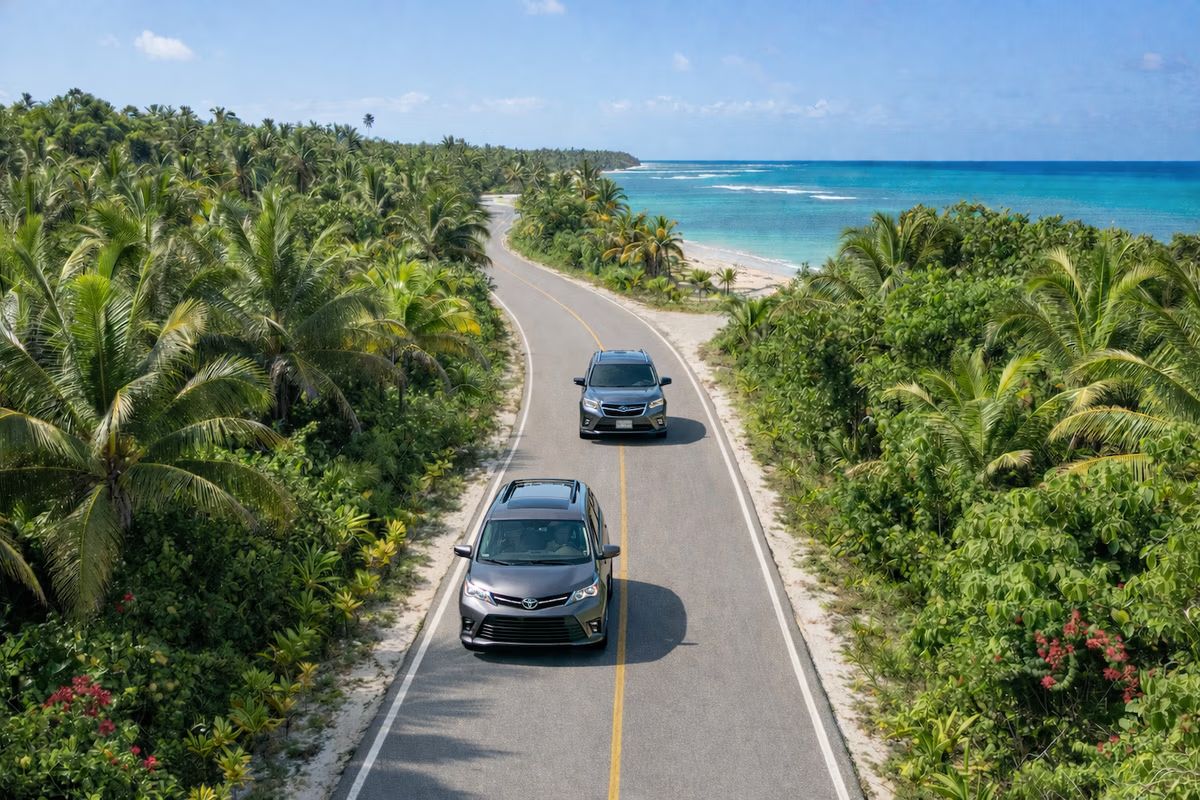
There is no bus to the gate. Every option from Cancún runs down Highway 307 to Tulum and then 4 km up the Cobá road.
| Option | What it costs (2026) | Realistic arrival | Best for |
|---|---|---|---|
| ADO bus + colectivo | ADO about 270–430 MXN each way, then a Cobá-bound colectivo for 30–50 MXN or a taxi for 150–300 MXN | 9:30 a.m. or later from the Hotel Zone | One or two light travellers on a budget |
| Rental car | Car and fuel; parking at the cenote is free | Whenever you choose | Confident drivers happy with 4+ hours at the wheel |
| Shared group tour | Tulum + Gran Cenote combos from roughly $35–95 per person | Usually late morning — the busiest window | Solo travellers |
| Private vehicle | A fixed quote per vehicle, not per seat | 8:00 a.m., if you leave the Hotel Zone at 5:45 | Families, groups, and anyone who wants the quiet hour |
The bus is genuinely fine for one or two people who don't mind a later start. The catch is time: from a Hotel Zone room you first have to get downtown to the ADO terminal, ride about 2 h 30 m to Tulum, then find a colectivo. Being in the water before 9:30 is hard, and by 10:00 the vans are there too.
From about three passengers up, the arithmetic turns. A private vehicle is priced per vehicle rather than per head, leaves when you say, and waits while you swim — short of driving yourself, it is the only way from Cancún to be in the water at 8:00. Our private Tulum & Gran Cenote tour includes both entry tickets, snorkel gear and a life vest.
What Gran Cenote is actually like inside
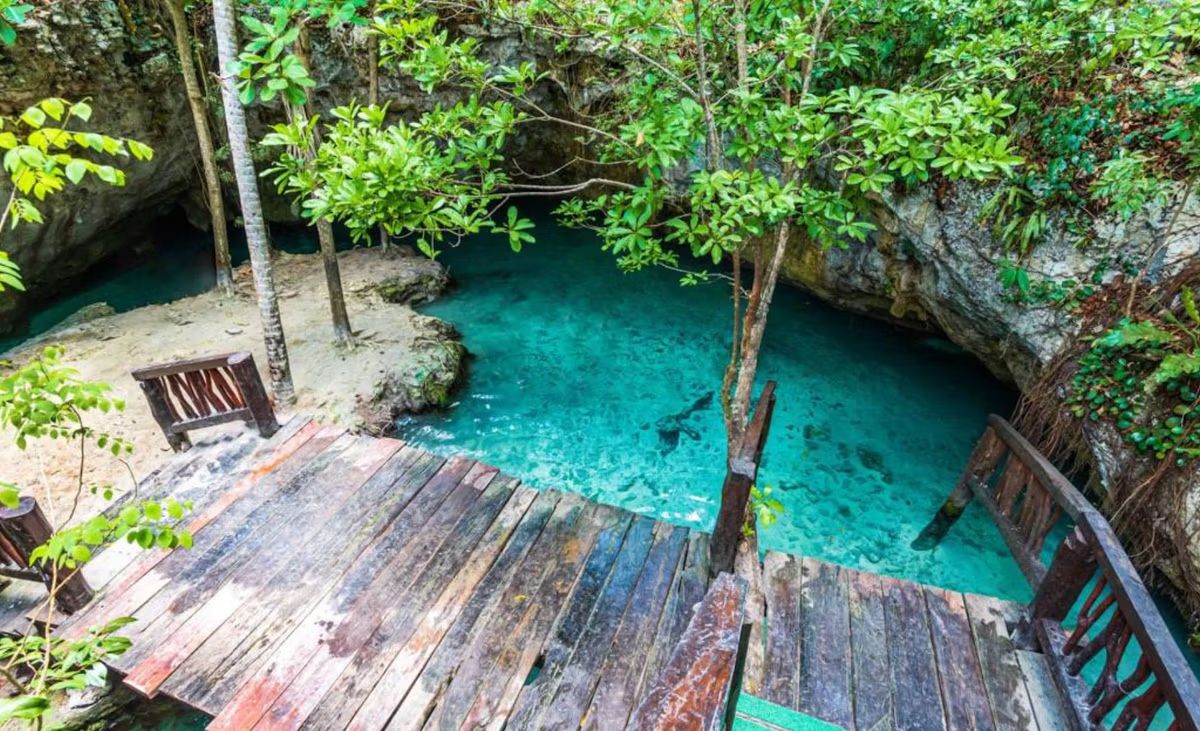
You pay at the gate, shower, and walk down wooden steps into a collapsed limestone sinkhole. Gran Cenote is “semi-open”: sunlit pools joined by a stretch of cavern, so you swim from open sky into shade and back out again.
Under the rock you float past stalactites, with bats roosting in the ceiling. The water is clear enough to see the white limestone floor, stays around 23–24 °C all year, and is shallow near the platforms, reaching roughly 10 m at its deepest. Most people never leave the surface.
What you're floating in is bigger than it looks. Gran Cenote is an entrance to Sac Actun, the flooded cave network that Mexico's INAH and the Gran Acuífero Maya project confirmed in 2018 as the largest known in the world, at 347 km of passages. Certified cave divers drop into it from here.
Searching for “Sac Actun”? The separately run Cenote Sac Actun tour is a different entrance to the same system, about 22 km north of Tulum off Highway 307, on the same access road as Dos Ojos. Different gate, different ticket.
The Gran Cenote turtles, the bats and the no-touch rule
The turtles are small freshwater turtles that live in the cenote and hang around the wooden platforms and tree roots. They are easiest to see early, while the water is quiet; once a hundred swimmers arrive they keep their distance.
Look, don't touch: no touching, no feeding, no chasing for the photo. The bats in the cavern ceiling are harmless and spend the day asleep.
The rules staff actually enforce — and why
Gran Cenote is stricter than any beach, for a real reason. The Yucatán Peninsula has almost no rivers on the surface: its fresh water flows underground, and cenotes are the windows onto it. Whatever you wear into the water ends up in the region's drinking-water aquifer.
No sunscreen or repellent — reports differ on whether “reef-safe” labels are tolerated, so plan on wearing none. Shower first; staff check. Life jacket on in the water, whatever your swimming level. No jumping from rocks or platforms.
Do what the regulars do: wear a rash guard or a long-sleeve swim shirt instead of sunscreen, and put repellent on after your swim, not before.
The best time to visit Gran Cenote
Be there at 8:00. The first 90 minutes are the calm window before tour groups start arriving around 10:00. Between late morning and mid-afternoon in high season the cavern can be shoulder to shoulder, and midweek is calmer than the weekend.
Late afternoon is the other quiet slot, but last entry is around 4:15 p.m., which leaves you roughly half an hour in the water.
One more reason to keep Gran Cenote in your back pocket: it is fresh water, inland, under a rock roof. When sargassum seaweed piles up on the beaches or the sea turns choppy, the cenote is unaffected.
Other cenotes on the same road
Gran Cenote is the famous one, not the only one. The Cobá road is lined with cenotes, each with its own gate and entry fee, which is useful to know if Gran Cenote is packed when you arrive.
Cenote Calavera is 2 km back toward Tulum town: small, deep, and known for jumping in through holes in the rock — the thing Gran Cenote forbids. Cenote Zacil-Ha is 4.5 km further west, an open-air pool with a small zipline over the water. Dos Ojos, the other big cavern-snorkel cenote and part of the same Sac Actun system, is about 30 minutes north on Highway 307.
Gran Cenote or Akumal? Picking the swim to pair with the Tulum ruins
Most people pair a swim with the Tulum ruins, and the real choice is between two very different waters: Gran Cenote's freshwater cavern, or the sea turtles of Akumal Bay, 30 minutes up the coast. We run both as private tours, so here is the honest comparison.
| Gran Cenote | Akumal Bay | |
|---|---|---|
| The water | Fresh, calm and clear; sunlit pools plus a cavern | Caribbean sea; a shallow bay with seagrass, sometimes choppy |
| The turtles | Small freshwater turtles around the platforms | Wild green sea turtles grazing on seagrass |
| The rules | Life jacket, shower first, no sunscreen | A protected refuge since 2016: licensed guide and life jacket in the turtle zone, no sunscreen, keep your distance |
| Sargassum | Never reaches it | Can affect the bay in season |
| From the Tulum ruins | 10–15 min | ~30 min |
| Best for | Cave light, photos, nervous swimmers and children in life jackets | Seeing sea turtles in the wild |
| Our private tour | Tulum & Gran Cenote | Tulum & Akumal Snorkel |
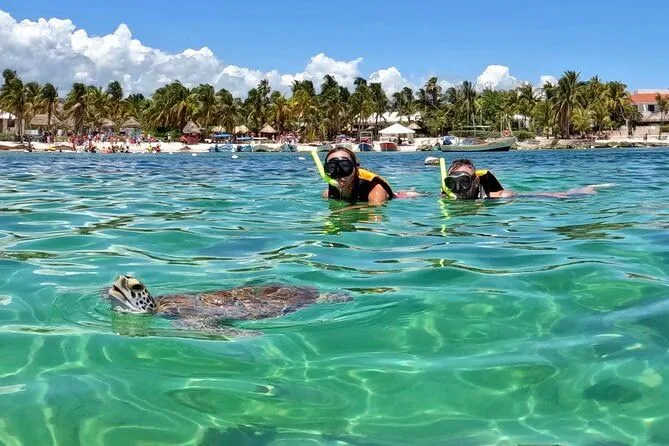
Our rule of thumb: if seeing a sea turtle is the point of the day, choose Akumal. If the forecast shows sargassum, the sea is rough, or anyone in your group is uneasy in open water, choose Gran Cenote — enclosed, calm water with a life jacket on is about as gentle as swimming gets.
Tulum ruins first, or Gran Cenote first?
Both open at 8:00 and they are 10–15 minutes apart, so the order decides which one you get while it is quiet.
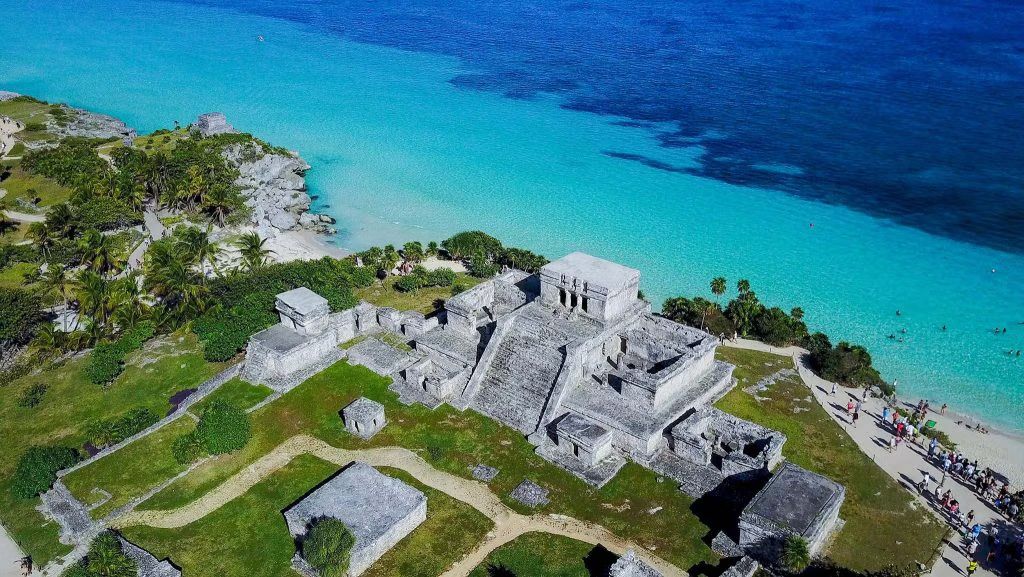
Ruins first is the classic order: you walk the clifftop ruins in the cool of the morning — they have almost no shade — then cool off in the cenote. The trade-off is reaching Gran Cenote mid-morning, at its busiest.
Cenote first gets you glassy water, active turtles and an empty cavern for photos. The trade-off is walking the ruins closer to noon, in full sun.
Give the 8:00 slot to whichever matters more to you. On a private tour you set that order the day before; on a group tour it is fixed. The ruins sell their own tickets — an INAH entry plus a separate Jaguar National Park fee, both repriced in 2026 — so check the amount at the gate, or let the tour handle it: our private tour includes both site entries. If you only want the ruins, there is also the shorter Tour Express Tulum.
What a do-it-yourself Gran Cenote day costs
Here is the full stack for one adult going independently from downtown Cancún by bus, the cheapest realistic way:
| Item | 2026 cost per adult |
|---|---|
| ADO bus, Cancún–Tulum and back | ~540–860 MXN |
| Colectivo to the cenote and back (taxi: 300–600 MXN) | 60–100 MXN |
| Gran Cenote entry | 500 MXN |
| Locker | 30 MXN |
| Snorkel rental (skip it if you bring a mask) | ~80 MXN |
| Total, before food | ~1,210–1,570 MXN |
For one or two people that is the cheapest way to do it, and we would tell you so. For four adults it comes to roughly 4,800–6,300 pesos plus about six hours on buses and colectivos — the point where a private vehicle, priced per vehicle and waiting while you swim, is worth a quote.
What to bring
Cash in pesos for the entry, the locker and any rental. Your own snorkel mask if you have one. A rash guard or long-sleeve swim shirt instead of sunscreen, a towel, a dry bag, and sandals or water shoes for the wet wooden steps. Keep the insect repellent for after your swim.
Staying in Tulum rather than Cancún? Our Cancún airport to Tulum guide compares every way to get there, and Gran Cenote is then 10 minutes from town. Planning more jungle days? See Cobá, the pyramid you can climb again — it sits further along the same Cobá road.
Frequently asked questions
How much does Gran Cenote cost in 2026?
Entry is 500 MXN per adult in 2026, and children pay a reduced rate. Pay in Mexican pesos: dollars are accepted at a poor exchange rate, which pushes the real cost to around 30 US dollars or more. Budget about 30 MXN for a locker and around 80 MXN for snorkel rental if you do not bring a mask. Plenty of older guides still quote 150 to 180 pesos; that price is gone.
What are Gran Cenote's opening hours?
Gran Cenote opens every day at 8:00 a.m. and closes around 4:45 p.m., with last entry at about 4:15 p.m. The first 90 minutes are the quietest, because tour groups usually start arriving around 10:00. Late afternoon is calmer too, but last entry leaves you only about half an hour in the water.
How far is Gran Cenote from Cancún?
About 133 to 138 kilometres from the Hotel Zone, which is 2 hours to 2 hours 15 minutes each way, and about 120 kilometres, or 1 hour 45 minutes, from Cancún airport. The cenote is 4 kilometres west of Tulum town on the road to Cobá, so from Cancún it is a long morning or a day trip, not an afternoon swim. From Playa del Carmen it is about an hour.
Can you see turtles at Gran Cenote?
Usually, yes. Small freshwater turtles live in the cenote and gather around the wooden platforms and tree roots, and they are easiest to see in the quiet first hour after 8:00. They are wild animals: no touching, feeding or chasing them for a photo. If you want sea turtles, the place is Akumal Bay, about 30 minutes up the coast.
Can you wear sunscreen at Gran Cenote?
No. Sunscreen and insect repellent are not allowed in the water, and you have to shower before you get in. Reports differ on whether reef-safe products are tolerated, so the only safe plan is to wear none and cover up with a rash guard. The cenote opens onto the underground aquifer that supplies the region's fresh water, which is why the rule is enforced.
Do you need to be a strong swimmer for Gran Cenote?
No. A life jacket is compulsory for everyone in the water, and wooden steps and platforms let you get in gradually instead of jumping. The water is calm, with no waves or current, and most people simply float at the surface. That is why Gran Cenote works well for families and nervous swimmers.
Is snorkel gear included at Gran Cenote?
It varies. A life jacket is normally handed out with the ticket, but a snorkel mask is often an extra rental of around 80 MXN. The simplest fix is to bring your own mask. On TT & More's private Tulum and Gran Cenote tour, snorkel gear and a life vest are included along with both entry tickets.
Is Gran Cenote worth 500 pesos?
If you arrive early, yes: the light in the cavern, the stalactites and the turtles are hard to match this close to Tulum. At midday in high season it can feel crowded for the price. Aim for the 8:00 opening, or pair it with the Tulum ruins and give the cenote the first slot of the day.
Should I choose Gran Cenote or Akumal?
Choose Akumal if seeing wild sea turtles is the point of your day: it is a protected bay where a licensed guide and a life jacket are required in the turtle zone. Choose Gran Cenote for calm, clear fresh water, cave light, and a swim that sargassum seaweed cannot spoil. Both pair well with the Tulum ruins.
Can you visit the Tulum ruins and Gran Cenote in one day?
Yes. They are 10 to 15 minutes apart by road and both open at 8:00, so from Cancún the pair makes an 8 to 9 hour day. Put whichever matters more to you first, the ruins for cooler walking or the cenote for quiet water, because the second stop will be busier.