
Cobá Ruins in 2026: The Pyramid You Can Climb Again, and How to Get There
Nohoch Mul reopened to climbers on 8 December 2025. Prices, the 3:30 p.m. cut-off, and every route from Cancún and Tulum.
The quick answer: Cobá in 2026
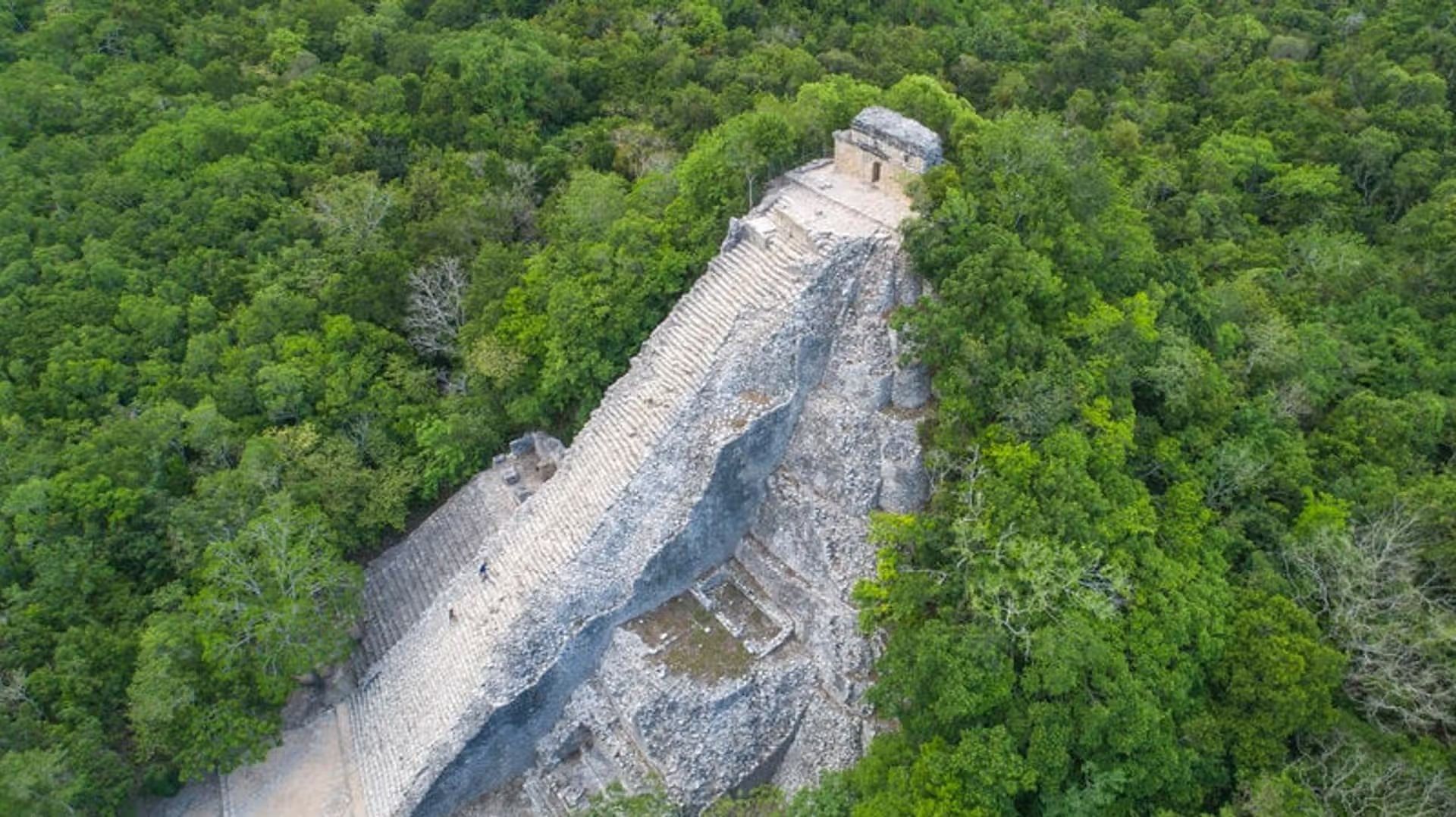
Yes — you can climb the pyramid at Cobá again. INAH reopened Nohoch Mul to climbers on 8 December 2025 after six years closed, using a new wooden staircase built over the original 120 stone steps. At 42 metres it is the tallest Maya pyramid in the northern Yucatán, and now the only major one in the region you are allowed to climb.
The essentials: entry in 2026 is 330 MXN for a foreign adult (210 MXN INAH + 120 MXN ejido fee), the site opens 8:00 a.m. to 5:00 p.m. with last admission at 4:00 p.m., and climbing stops at 3:30 p.m. Cobá is about 45 minutes from Tulum, and roughly two hours from Cancún.
Almost every guide still online was written during the closure and tells you the pyramid is off limits. That is out of date — and it changes the answer to the question most visitors are really asking, which is whether Cobá is worth a day when Chichén Itzá exists.
What actually changed on 8 December 2025
Nohoch Mul closed to climbers in 2020, along with the pyramids at Chichén Itzá and Uxmal, and most people assumed that was permanent. It was not.
Mexico's Culture Secretary, Claudia Curiel de Icaza, inaugurated a new staircase on the pyramid on 7 December 2025, and the ascent reopened to the public the following day. The staircase was designed by INAH's national works coordination, approved by the Archaeology Council, and built by carpenters from the nearby community of Nueva Esperanza using local hardwoods — tzalam, caoba, parota and chicozapote. It sits over the ancient steps rather than replacing them, so the original stonework carries no foot traffic. Each of the 120 steps was surveyed, re-levelled and consolidated first.
The work was part of Promeza, INAH's archaeological-site improvement programme tied to the Tren Maya. In plain terms: this was a considered restoration, not a temporary opening, and there is no announced end date.
The climbing rules you need to plan around
Cobá or Chichén Itzá? The answer changed
For six years this was easy to answer: Chichén Itzá is the Wonder of the World, go there. Now that one of the two lets you climb and the other does not, it is a real choice again.
| Cobá | Chichén Itzá | |
|---|---|---|
| Climb the pyramid? | Yes, since 8 Dec 2025 | No |
| Pyramid height | 42 m (Nohoch Mul) | 30 m (El Castillo) |
| Entry 2026 | 330 MXN | 697 MXN |
| From Tulum | ~45 min | ~2 h |
| From Cancún | ~2 h | ~2 h 30 m |
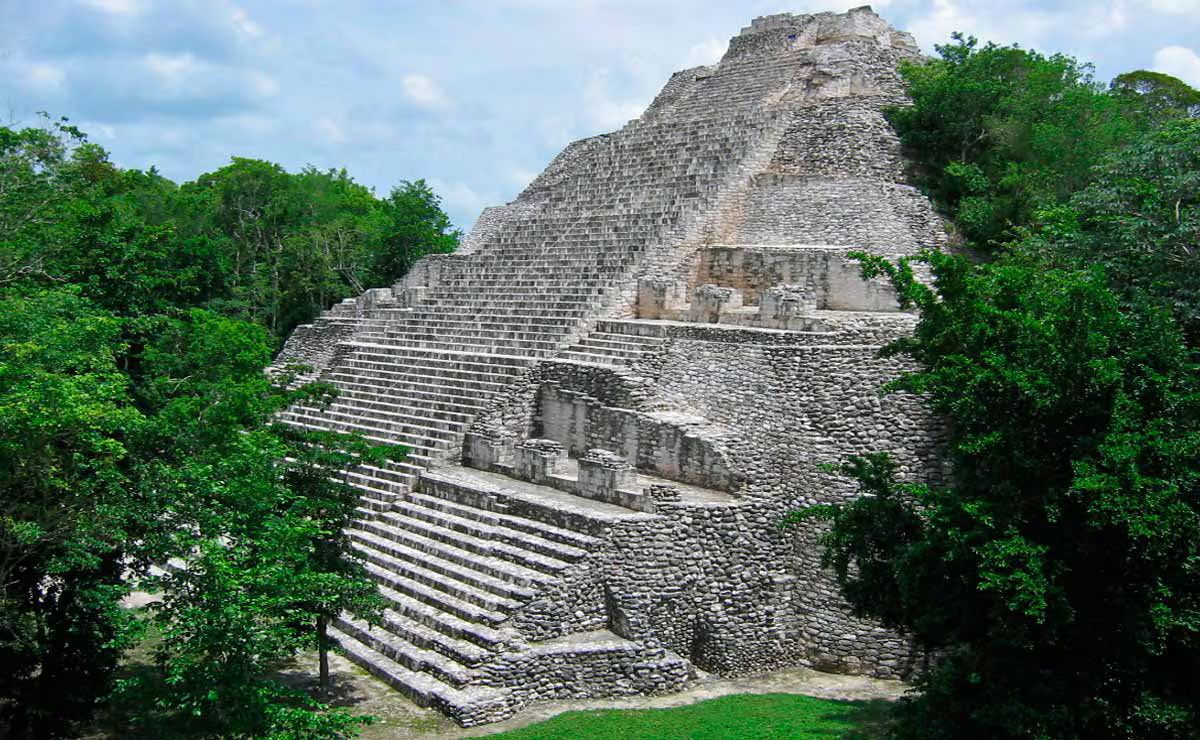
| Setting | Jungle, spread over several km, mostly unrestored | Open plazas, heavily restored, monumental |
| Getting around | Walk, rent a bike or hire a bici-taxi | All on foot |
| Crowds | Much lighter | Very heavy from 10 a.m. |
| Time needed | 2–3 hours, a half day from Tulum | 3 hours plus a long drive, a full day |
The short version: from Tulum, Cobá is a half day and Chichén Itzá is a whole one. If you want the famous silhouette and the archaeology, Chichén Itzá still wins. If you want to stand on top of a pyramid, look out over unbroken jungle, and not share it with forty coaches, Cobá is now the answer — and it is cheaper and closer. Plenty of people do both on different days, and they complement each other well.
How far is Cobá from Cancún, Tulum and Playa del Carmen?
Clean driving times, no stops. Add 20–30 minutes in practice for hotel exits and the last stretch on Highway 109.
| From | Distance | Drive time each way | Realistic trip |
|---|---|---|---|
| Tulum | ~45 km | 45–55 min | Half day, 5–6 hours |
| Playa del Carmen | ~100 km | ~1 h 20 m | 7–8 hours |
| Cancún | ~170 km | ~2 h | 8–9 hours |
| Akumal / Puerto Aventuras | ~80 km | ~1 h 10 m | 6–7 hours |
Every way to get to Cobá
One thing to know up front: there is no direct ADO bus to Cobá from Cancún or Playa del Carmen. Public transport to the ruins effectively means a colectivo from Tulum, which is why the options here look different from a Chichén Itzá trip.
| Option | Typical 2026 cost | Arrival | Honest verdict |
|---|---|---|---|
| Private transfer or tour | Flat vehicle rate, 1–9 passengers | Whenever you choose — 8:00 a.m. is realistic | The only option that reliably beats the climbing queue and the heat, and the only door-to-door one from Cancún. Best value from about 3 people up. |
| Colectivo from Tulum | 60–80 MXN each way | Depends on departures | Excellent value if you are already in Tulum. Vans leave when full, and the last one back fills up fast in the afternoon. |
| Group tour | Per seat, usually bundled with cenotes | Typically 10:00–11:30 a.m. | Cheapest for one or two people. You arrive in the queue window and leave on the coach's schedule, not yours. |
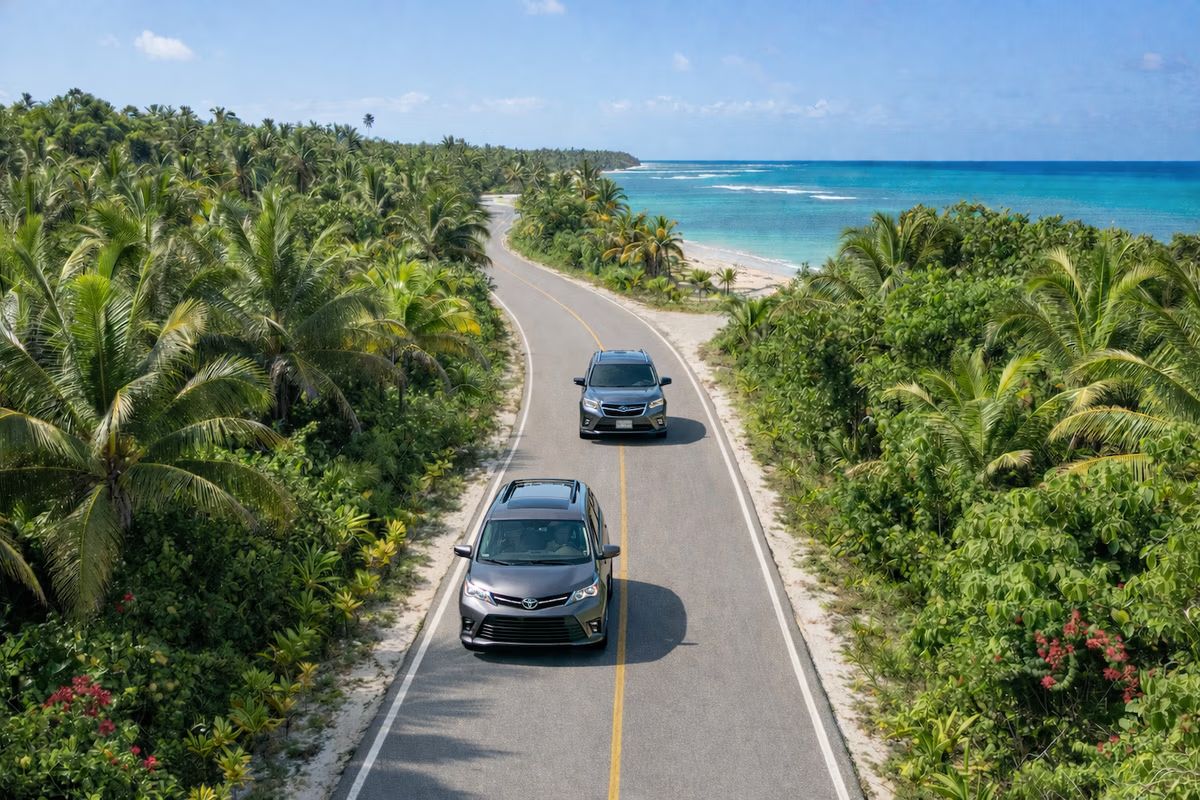
| Rental car | Rental + fuel + ~80 MXN parking | Whenever you choose | Highway 109 is a straightforward drive and this is a good self-drive destination. Watch for topes and cyclists through the villages. |
| Taxi from Tulum | 400–600 MXN one way | Flexible | Fine one way, but agree the fare first and arrange the return — taxis waiting at Cobá are scarce and priced accordingly. |
| ADO bus | — | — | No direct service to the ruins. Not a realistic option. |
Getting around inside Cobá: this is not a walk-up site
Cobá catches people out because it is big. The ancient city sprawls across several kilometres of jungle, and Nohoch Mul is roughly 2 km from the entrance along a sacbé — an old raised Maya road. There are four main areas: the Cobá Group near the gate, Conjunto Las Pinturas, the Macanxoc Group with its carved stelae, and Nohoch Mul itself, plus two lakes.
Three ways to cover it, all available at the entrance with no booking:
Walk — free, shaded, and about 5–6 km round trip if you see everything. Pleasant early, punishing by midday.
Rent a bicycle — roughly 80–100 MXN. The most popular choice, and genuinely fun on flat jungle paths.
Hire a bici-taxi (triciclo) — a driver pedals a two-seat tricycle. The right call in heat, with children, or with limited mobility.
Whatever you choose, budget the transit time. Getting to the base of the pyramid, queueing, climbing and coming back is comfortably 90 minutes on its own.
The three cave cenotes near Cobá
A few kilometres south of the ruins sit three cenotes that most visitors pair with the site, and they are a different species from the open sinkholes of the coast: these are cave cenotes, reached by steep staircases down into the rock, lit and cool.
Choo-Ha is the shallowest and the easiest with children, about five minutes' drive from the ruins. Tamcach-Ha is the deep one, with diving platforms and a long descent. Multun-Ha is the quietest of the three. They share a combined ticket, and the closest two are about a 20-minute bike ride from the site if you are feeling energetic.
Realistically, two cenotes add about an hour to your day and all three add closer to two. Do the ruins first — the climbing cut-off is at 3:30 p.m., and the cenotes do not have one.
The timing that decides your day
Cobá has a tighter real deadline than its opening hours suggest, and it is worth spelling out.
The gate opens at 8:00 a.m. Climbing runs until 3:30 p.m. in capped groups of fifteen. Coach tours from Cancún and Playa del Carmen tend to land between 10:00 and 11:30. The jungle paths hold heat, and midday inside the site is genuinely hot.
So the good window is 8:00 to 10:00 a.m. — cool, quiet, and no meaningful queue at the staircase. From Tulum that means leaving around 7:00 a.m., which is easy. From Cancún it means leaving around 6:00 a.m., which no group tour does. If the climb is the reason you are going, that departure time is the thing that actually matters.
Which option fits which traveller
| You are… | Best choice | Why |
|---|---|---|
| Staying in Tulum, on a budget | Colectivo, early | 60–80 MXN and 45 minutes. Cobá is the easiest major ruin to reach independently. |
| Staying in Cancún | Private transfer | Two hours each way with no direct bus. A 6 a.m. departure is the only way to climb before the queues. |
| A family with children | Private transfer + bici-taxi | Door to door, your own pace, and nobody has to walk 5 km in the heat. |
| Three to ten people | Private transfer | A flat vehicle rate split across the group usually beats per-seat tour pricing. |
| Set on climbing the pyramid | Anything that arrives by 9 a.m. | The 3:30 p.m. cut-off and 15-person groups make arrival time the whole game. |
| Short on time, want one ruin | Cobá from Tulum | Half a day instead of a full one, cheaper entry, and you get to climb. |
What to bring
Cash in pesos for entry, bike hire and the cenotes; card acceptance is patchy. Closed-toe shoes with grip are non-negotiable if you intend to climb. Add insect repellent — this is real jungle and it is noticeably buggier than the coastal sites — plus sun protection, more water than you think, and a swimsuit and towel if the cenotes are on the plan.
Frequently asked questions
Can you climb the pyramid at Cobá in 2026?
Yes. INAH reopened the ascent of Nohoch Mul on 8 December 2025, after six years closed, using a new wooden staircase built over the original 120 stone steps. Climbing runs from 8:00 a.m. to 3:30 p.m. in groups of up to 15 people, with about 15 minutes at the summit, and closed-toe shoes with grip are required. It is suspended during rain or strong wind. Most guides written between 2020 and 2025 still say climbing is banned, which is no longer correct.
How much does it cost to enter Cobá?
In 2026 a foreign adult pays about 330 MXN in total: a 210 MXN federal INAH fee plus a 120 MXN ejido community fee charged locally. That is roughly 19 to 20 US dollars, and around half what Chichén Itzá costs. Bring pesos in cash. Bicycle hire is extra, at roughly 80 to 100 MXN, and the nearby cenotes have their own separate ticket.
What are Cobá's opening hours?
The archaeological zone opens at 8:00 a.m. and closes at 5:00 p.m., with last admission at 4:00 p.m. The important detail is that climbing Nohoch Mul stops at 3:30 p.m., an hour and a half before the site closes — so arriving at 3:00 p.m. may get you into the site but not up the pyramid.
How far is Cobá from Tulum?
About 45 kilometres, or a 45 to 55 minute drive on Highway 109. That proximity is Cobá's biggest advantage: from Tulum it is a comfortable half-day trip, where Chichén Itzá is a full day of driving. A colectivo costs 60 to 80 MXN each way and takes around 45 minutes.
How far is Cobá from Cancún?
Roughly 170 kilometres, about two hours each way by road, making it an 8 to 9 hour day in total once you include the site, the cenotes and lunch. There is no direct ADO bus to the ruins from Cancún, so the practical options are a private transfer, an organised tour, or a rental car.
Is Cobá better than Chichén Itzá?
They are different trips. Chichén Itzá is a Wonder of the World with monumental restored plazas, but you cannot climb it, entry is 697 MXN and it is crowded from mid-morning. Cobá is quieter, half the price, largely unrestored jungle, far closer to Tulum, and since December 2025 it is the one where you can stand on top of the pyramid. If you only have one day and want the icon, choose Chichén Itzá; if you want the climb and the jungle, choose Cobá.
How tall is the Nohoch Mul pyramid?
Nohoch Mul stands 42 metres, about 138 feet, which makes it the tallest Maya pyramid in the northern Yucatán Peninsula — roughly 12 metres taller than El Castillo at Chichén Itzá, which reaches about 30 metres including its temple. The ascent is around 120 steps and is steep; the handrail on the new staircase matters most on the way down.
Do I need to rent a bike at Cobá?
Not strictly, but most people are glad they did. The site sprawls over several kilometres of jungle and Nohoch Mul sits about 2 km from the entrance along an ancient raised road. Walking everything is 5 to 6 km round trip. Bicycles cost roughly 80 to 100 MXN, and bici-taxis with a driver are available at the entrance with no booking — the better choice in heat, with young children, or with limited mobility.
Which cenotes are near Cobá?
Three cave cenotes sit a few kilometres south of the ruins: Choo-Ha, the shallowest and easiest with children; Tamcach-Ha, the deep one with diving platforms; and Multun-Ha, the quietest. They are underground caverns reached by steep staircases, not open-air sinkholes, and they share a combined ticket. Choo-Ha is about five minutes' drive from the site. Visit the ruins first, since the climbing cut-off is at 3:30 p.m. and the cenotes close later.
How long do you need at Cobá?
Two to three hours inside the archaeological zone covers it comfortably, including cycling out to Nohoch Mul, queueing and climbing. Add about an hour for two cenotes. From Tulum the whole outing is 5 to 6 hours; from Cancún, 8 to 9. Arriving at opening rather than mid-morning is the single biggest improvement you can make to the day.